📚 Daisy History Resources
For those interested in Daisy history, we recommend picking up a copy of “It’s a Daisy” by Cass S. Hough (published 1976; reprinted as a 30th anniversary edition in 2006 — Library of Congress catalog no. 76-18629). Elizabeth Kelley Kerstens’ “Plymouth’s Air Rifle Industry” is a tremendous overview of the early years of the airgun industry in Plymouth, Michigan (Acadia Publishing, 2013; ISBN 978-1-4671-1046-4). Daisy collectors cite “An Encyclopedia of Daisy Plymouth Guns” by Gary Garber (ISBN 978-0-9792846-0-1) as the most comprehensive resource on Daisy models made in Plymouth, MI. The Daisy Museum also published an “Airgun Collector’s Guide” in 2015 showing line art drawings for each model, catalog years, and key features — still available through the Museum. Blue Book Publications’ “Blue Book of Airguns” has an excellent Daisy section listing most models, variants, and estimated values.
“It’s a Daisy!”
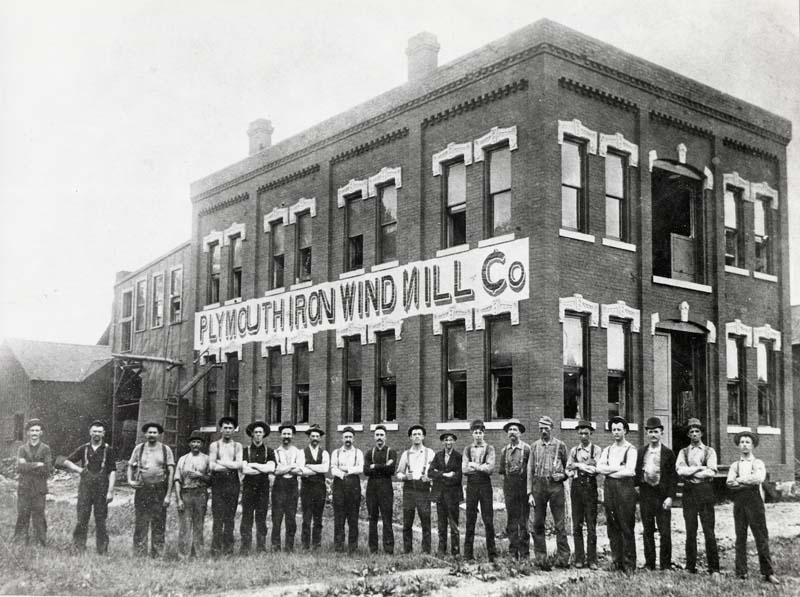
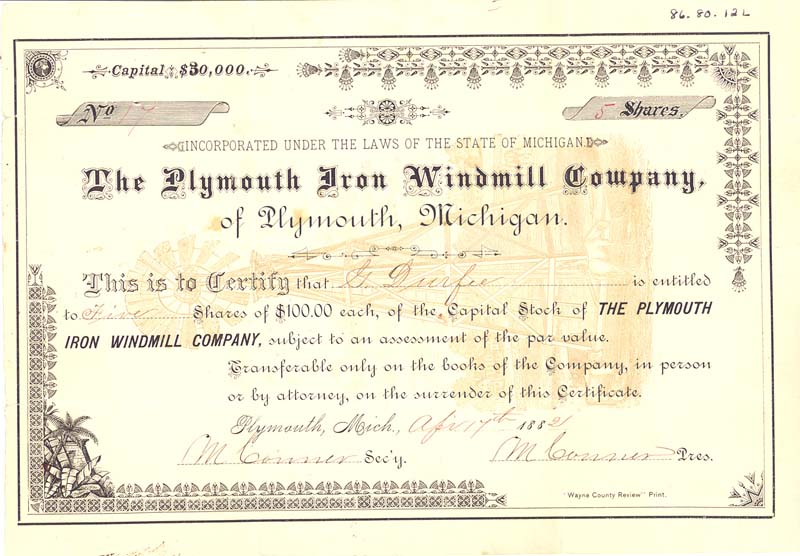
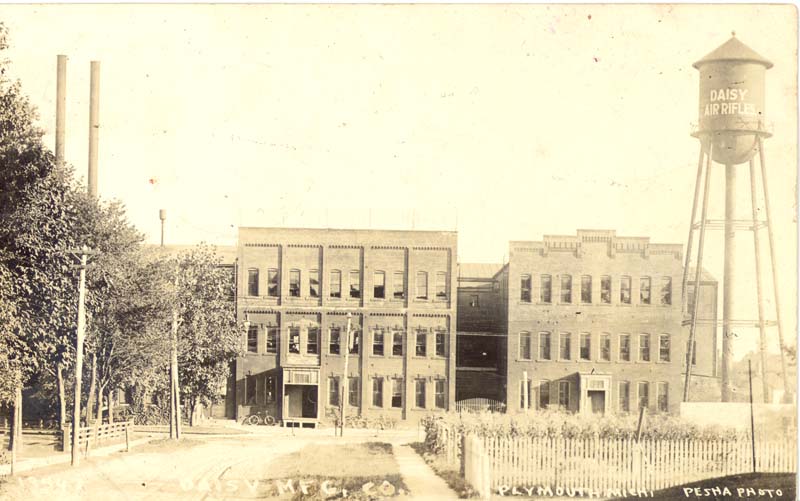
The year was 1886. France had just given the bright copper Statue of Liberty to the United States. Coca-Cola had just been invented and was only available as a syrup mixed with soda water. The Plymouth Iron Windmill Company in Plymouth, Michigan, just outside of Detroit, had for four years been making iron windmills for farmers. However, a premium item given free to farmers who purchased these windmills was about to change that company’s destiny.
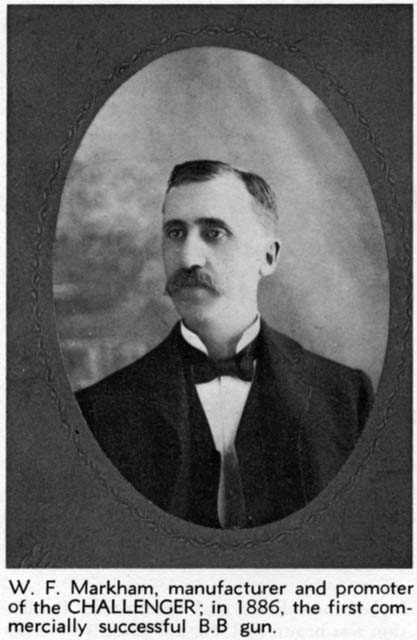
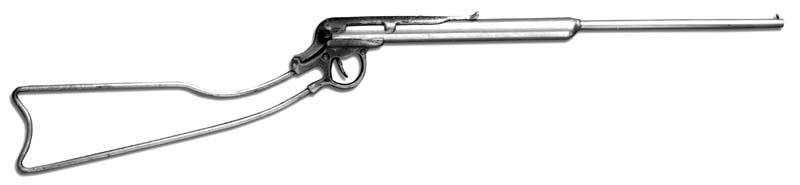
Windmill sales did not take off as expected and the company came close, in 1888, to liquidating. The vote failed by one vote — that of General Manager Lewis Cass Hough. While the Markham Air Rifle Company of Plymouth had been making wooden airguns since 1886, Clarence Hamilton was the first to develop a metal air rifle. After firing the gun (first into a waste basket, then a shingle), Hough exclaimed to the gun’s inventor and PIWCo. founder Clarence Hamilton, in the slang of the time:
“Boy, that’s a Daisy!”
Lewis Cass Hough, General Manager · 1888He later convinced the Board of Directors to use the metal air rifle as a premium item.
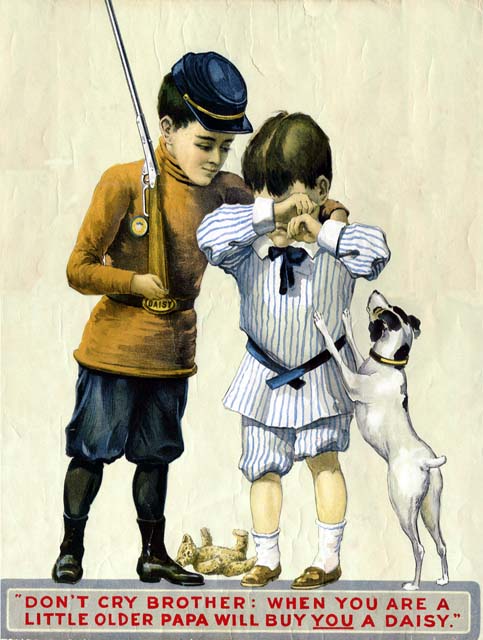
The popularity of the premium item was huge. Farmers were more interested in the “Daisy” than the windmill — so much so that the focus of the company shifted from windmills to airguns. By 1890, the twenty-five employees of Plymouth Iron Windmill Company were producing 50,000 guns, most of which were distributed within a radius of one hundred miles of the factory.
Out of the Windmill Business
“I am not a good shot, but I shoot often.”
Theodore Roosevelt“With a 1000-shot Daisy Repeater, you can shoot both straight and often.”
Daisy MFG. CO.1891 — Charles Bennett is hired to serve as the Company’s first salesman at a salary of $85/month plus expenses. Two days after being hired, Bennett makes a trip to Chicago and sells 10,000 guns to Hibbard, Spencer, Bartlett & Company. The order is filled in 6 months.
1893 — Edward C. Hough joins the company to keep the books part time while continuing to run his father’s grain elevator business.
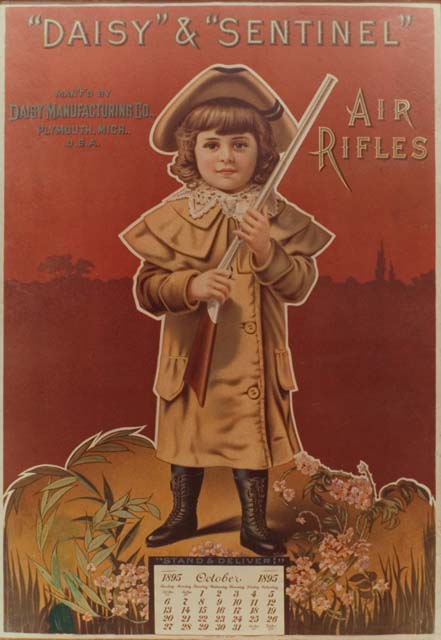
1895 — The Plymouth Iron Windmill Company gets out of the windmill business for good and changes its name to Daisy Manufacturing Company.

Establishing a Global Market
By the end of the 19th Century, Daisy had established itself as the dominant force in the burgeoning air gun industry, having seen the appearance and demise of some 30 competitors during its first decade. The company continues to hold that market-dominant position today.
Daisy suffered a major loss with the death of Lewis Cass Hough on January 11, 1902 at the age of 56. L.C. Hough was one of the founders of the Plymouth Iron Windmill Company and as General Manager had fought hard to keep the struggling company operating during its early years. With his passing, C. H. “Uncle Charlie” Bennett was named General Manager and E. C. Hough, son of L.C., was named Secretary/Treasurer. For the next 60 years this remarkable team directed the affairs of Daisy.
In January of 1903 Daisy introduced its first lever action repeater, the No. 3 — a nickel plated, 1,000-shot rifle that was to become the hallmark of Daisy styling and set the tone for forward thinking innovation that has served Daisy so well through the years. The new little rifle so captured the attention and interest of wholesalers and consumers that it sold over 36,000 units the first year.
With the advent of the 20th Century, Daisy’s export business was approaching 25% of its total annual sales without any real effort on the part of the company. At that point Charlie Bennett determined to pursue the international market and rather than hire someone for that purpose decided to pack up and make the world tour himself. From April to September 1907 Mr. Bennett traveled the world establishing Daisy’s export market. His trip, especially the China leg, is one of the many interesting stories related at the Daisy Airgun Museum.
The Lefever Years Begin
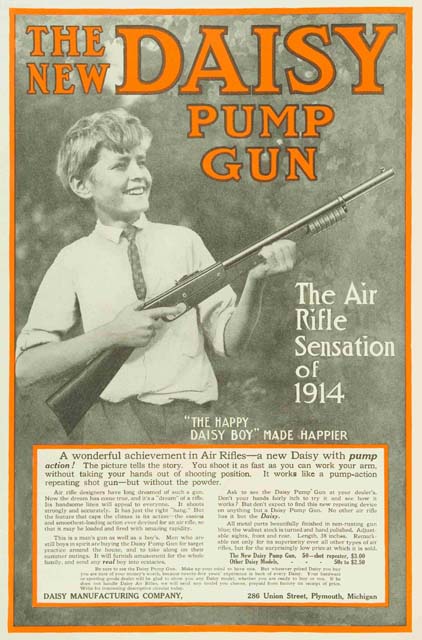
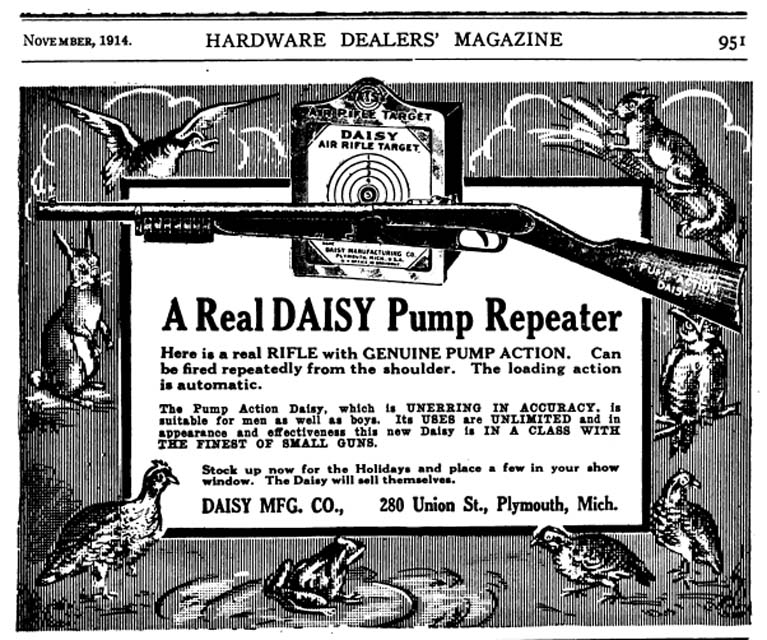
In late December 1911 a letter from a Charles F. Lefever of St. Louis found its way to the desk of E.C. Hough. In it Mr. Lefever said he had designed a pump gun. He laid out his credentials and said if Daisy was interested someone could “…come to St. Louis to see me, and I will show you the gun.” With the flurry of end of year business a response was sent saying that if Daisy were interested “…he would be contacted in the future.” Back came a letter saying if Daisy wasn’t interested others would be. Some years later Mr. Hough said such a letter would have turned him off but because the concept intrigued him he set out in early February to visit St. Louis and meet Mr. Lefever. Mr. Hough quickly realized that the gun design and the man were unique and invited him to Plymouth to which he agreed saying “… for a few months to get you started.”
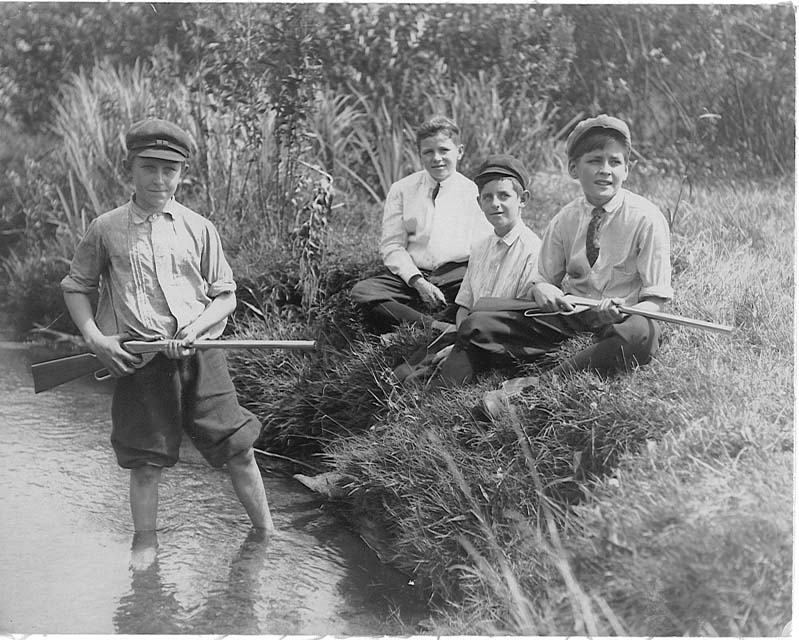
A month later Lefever arrived in Plymouth and remained a part of Daisy until his retirement in February 1953. During the ensuing years Lefever designed and engineered such Daisy classics as the Model 25. That remarkable pump gun, which was first produced in 1914, continued in production for the next 64 years until it was dropped from the line in 1979. At the time it was discontinued more than 8,000,000 of the guns had been produced and sold. Within two years of his arrival he had also designed the first water pistol and with the outbreak of World War I in August 1914, the Model 40 Defender which was an instant and overwhelming commercial success.
A cantankerous soul, Lefever quit nearly once a year during the 41 years he “chose to work for Daisy.”
The first handmade prototype of Lefever’s Model 25 pump gun is on display at the Daisy Airgun Museum.
Daisy and the BB Business
In the early days of air rifles, shot tubes were sized to utilize lead drop shot that was approximately .180 inches in diameter; a size referred to as “BB”, hence the name “BB gun”.
Shortly after the turn of the century, seeing the potential in the air gun ammo business, Daisy prevailed upon the makers of lead shot to create a special size ball with an average diameter of .175 inches and call it “Air Rifle Shot”. However, the name “BB” stuck and is still in common use today.
In the mid 1920’s Daisy began to experience an unusually high rate of returns the source of which was ultimately traced to the American Ball Company in Minneapolis, Minnesota, a manufacturer of steel ball bearings. Apparently, enterprising young lads in the area were salvaging bearings from the scrap out back of the plant to shoot in their guns. While some scrap worked well in the guns, some was oversize and either jammed or split the shot tube. When this was called to the attention of American Ball Company, some quick market research on their part revealed that there was a bigger market for air rifle shot than for their particular brand of bearings. Armed with this information they began manufacturing and selling steel balls in a size approximating air rifle shot under the brand name “Bulls Eye”.
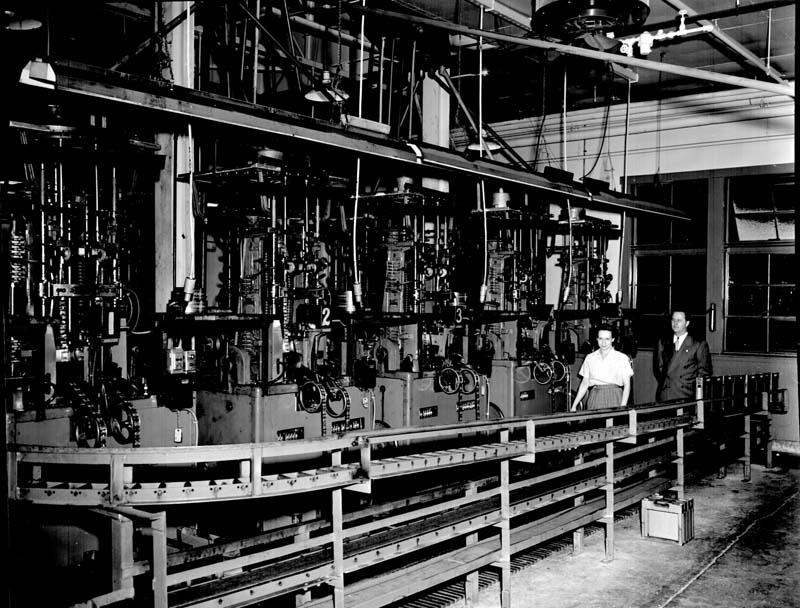
Because steel shot was less expensive to manufacture and performed better due to its lighter weight, sales skyrocketed. Quick to realize their return problems were only going to compound, Daisy redesigned its shot tubes to accommodate the “Bulls Eye” ammo and negotiated an agreement to become the exclusive sales agent for American Ball. The arrangement continued smoothly until Daisy acquired the assets of American Ball Company in early 1939.
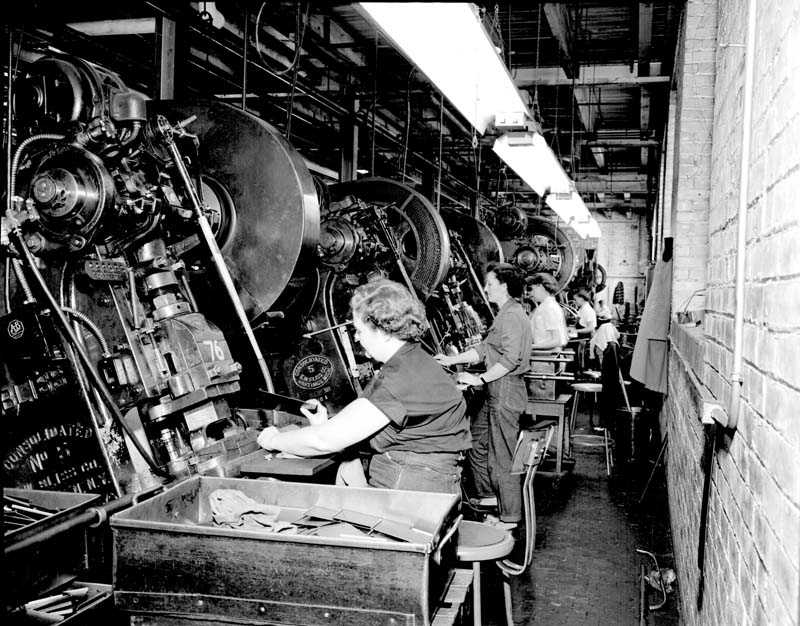
The Busy 30’s!
In company with most other businesses, Daisy entered the 1930’s suffering losses in sales and profits because of the state of the national economy. As the depression wore on Daisy learned that with fresh new advertising and sales promotion it did not have to “…take its lumps” with the rest of the world. It set up a pattern of promotional activity that is still the hallmark of the Daisy operation today.
One devise used to generate business during the depression was an offer for youngsters to trade in their old BB guns for new models. Much that came in was pure junk but a surprising number were in remarkably good shape and now make up much of what is on display in the Daisy Airgun Museum.
The 1930’s also saw Daisy advertising and promotions take on new directions that were to keep it operating at full capacity throughout the tough depression years. The first of those was a tie in with a young cowboy circus star named Buzz Barton. An instant sales success, another quickly followed with the most popular cowboy movie character of the time, Buck Jones.
The most successful, however, was taken from the pages of the newspaper comic strip Buck Rogers and the 25th Century. Introduced in 1933, the Buck Rogers Rocket Pistol was an instant success and was quickly followed the next year by the Buck Rogers Disintegrator Pistol and finally in 1935 by the Liquid Helium Pistol. All of which set sales records year after year.
Much of this ground breaking advertising and promotional material from the 1930’s is on display at the Daisy Airgun Museum.
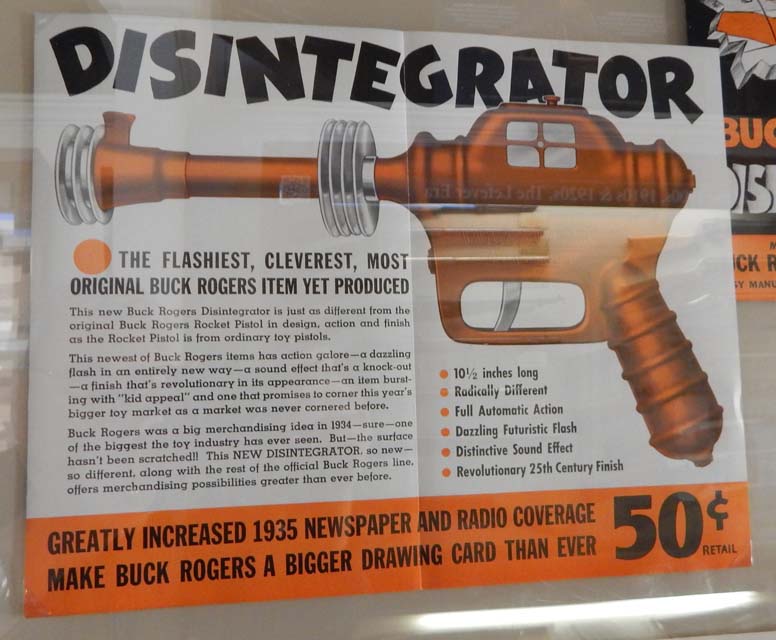
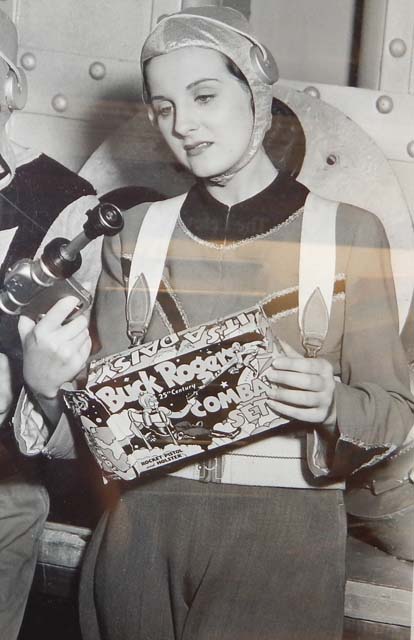
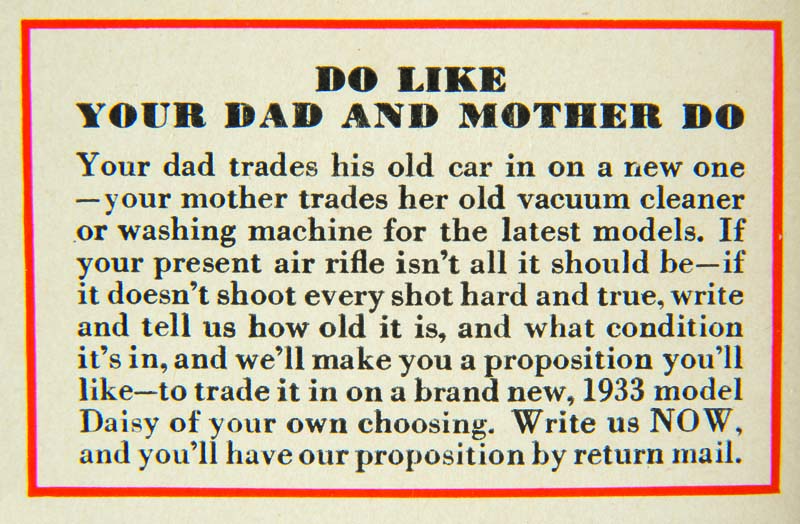
“Howdy Podner. My Name’s Red Ryder!”
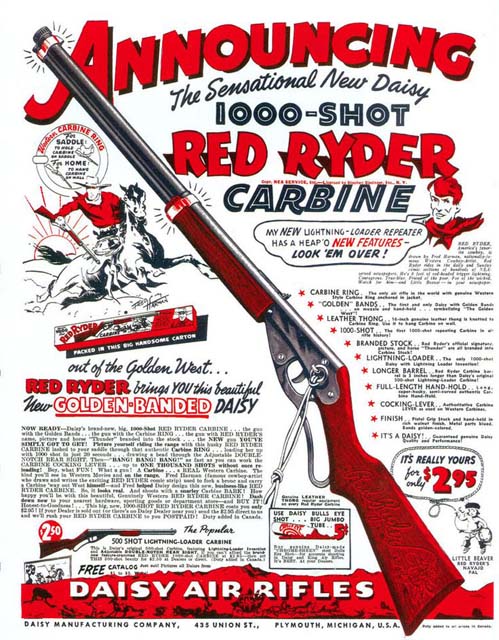
With the ground work firmly laid by the innovative promotions of the 1930’s, Daisy was ready to launch into its most successful promotion ever; the Daisy Red Ryder!
Based on the popular comic strip western hero — intellectual property of Stephen Slesinger and illustrated by western artist Fred Harman — the new gun was introduced in the spring of 1940 and produced until mid-1942, when Daisy’s production was converted to the war effort. Following the war, the air gun was reintroduced in November 1945. By 1949 it had become so popular that more than one million units were sold in a single year; a sales figure unheard of at the time! In fact, the Red Ryder had become so popular that on more than one occasion mail was received at the Daisy offices in Plymouth, Michigan addressed simply to the “Red Ryder Company”.
The Red Ryder was and still is the best-known BB gun ever built and a special display of Red Ryder BB guns at the Daisy Airgun Museum follows the progression of the Red Ryder over the years.
On the passing of Fred Harman III, his wife Norma graciously allowed the Daisy Museum to acquire the first Daisy Red Ryder gun ever made. A prototype, Daisy executives Cass Hough and Robert O. Wesley wrote on the stock, “Certified, Limited Edition, One Only,” then signed their names and affixed a gold star before handing the gun to artist Fred Harman. Fred scratched the date of that presentation into the metal frame — “APR 2 40” — and hung it high on the wall of his studio in Pagosa Springs, Colorado, where it hung for fifty-eight years. Norma had said that she wanted the gun to be displayed somewhere where the story of Red Ryder, the name and work of Fred Harman, and the significance of this first Daisy Red Ryder BB gun would be told. We are proud to be that place.
It was also in the late 40’s that Daisy introduced the famous penny pack of BBs wound in a long roll of individual cellophane segments allowing a youngster to tear off as many packs as his finances would support.
Read about the Daisy Museum’s acquisition of Fred Harman’s prototypical gun.

The War Years: 1942–1945
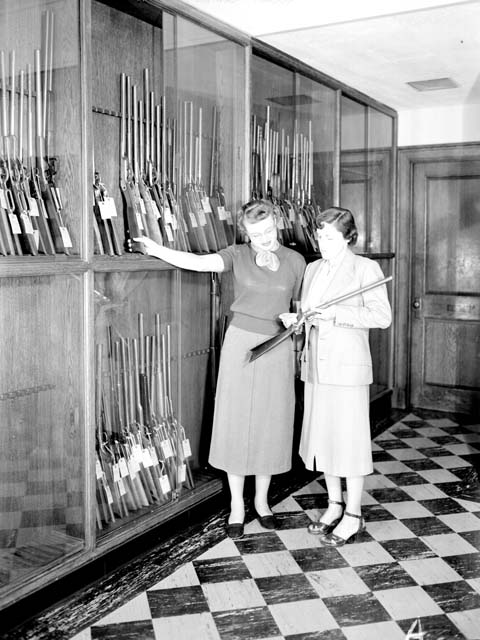
During the years of World War II, companies such as Daisy were prohibited from using steel and other strategic materials for production of products such as BB guns which were non-essential to the American war effort. Instead, production was focused on items ordered under War Department contracts and sub-contracts, such as the parts on display in the Daisy Museum. Gaskets were produced for AC Spark Plug Division, switches for Square D Manufacturing, ball races for Palmer-Bee, washers for Ligon Brothers, and dies for Bendix Aviation, Nippert Electric and Pilgrim Drawn Steel. Of the company’s total sales from 1942 to 1945, almost 24% were from products for the war and the balance were from non-steel toy products.
Colonel Cass Hough (then vice president and later president of Daisy) went on extended active duty in the 8th Air Force, just six months prior to the attack on Pearl Harbor. A decorated test pilot and fighter pilot, he didn’t return from overseas until October, 1945, having won many an air battle from the English Channel to New Guinea. Most notably, he had the distinction of having tested the limits of the Lightning P-38 in an experimental, yet successful, 43,000-foot vertical dive during which the plane broke the sound barrier.
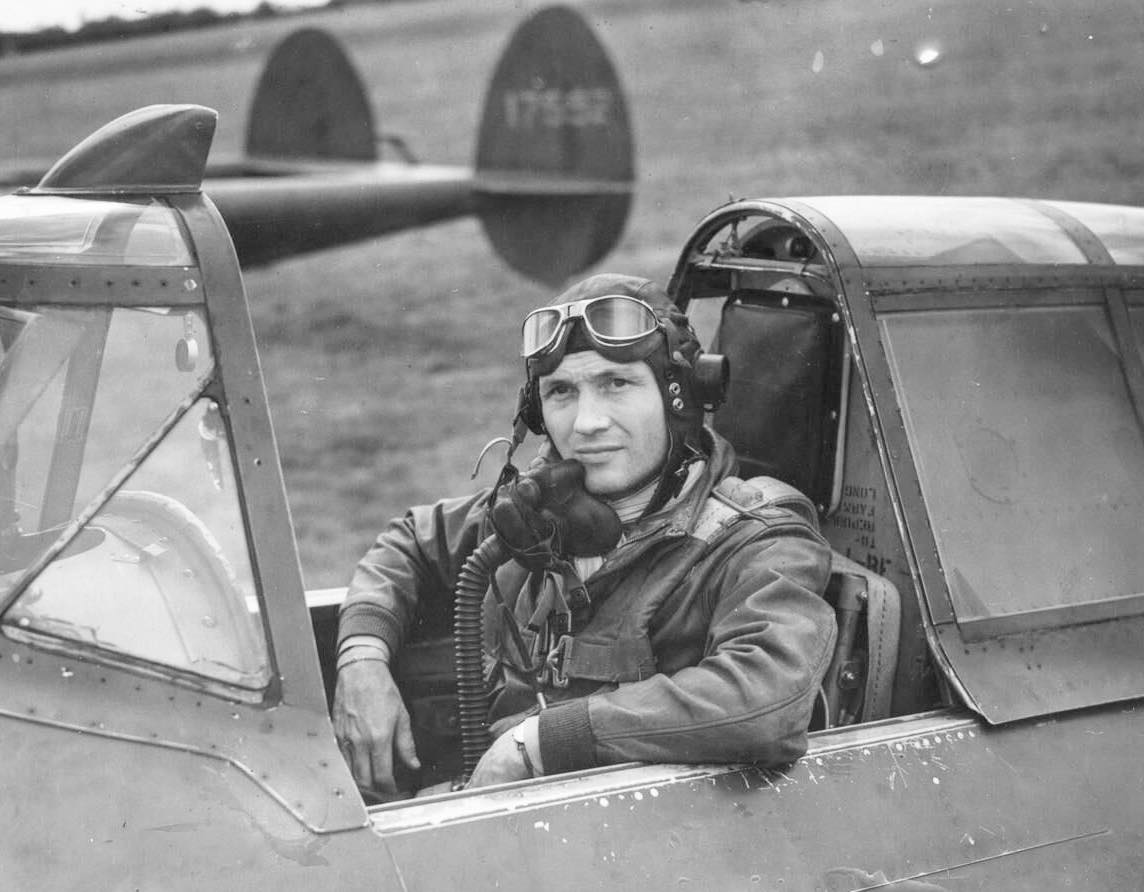
Col. Cass Hough
8th Air Force, World War II
According to his Air Force citation which was accompanied by the Distinguished Flying Cross, “Colonel Hough achieved…the longest terminal velocity dive in history. He knowingly and deliberately entered unknown regions of the air. The courage, skill and devotion to duty displayed by this officer reflect the highest credit upon himself and the Armed Forces of the United States.”
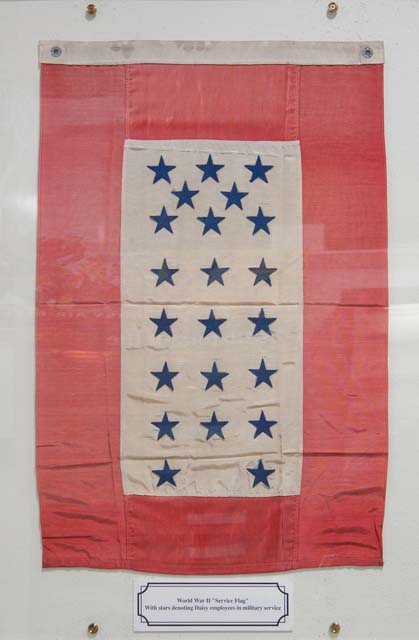
The banner and Roll of Honor, on display in the Daisy Museum, were proudly displayed in the Plymouth, Michigan plant where they saluted those in active military service during World War II.
Throughout history and numerous wars and conflicts, Daisy remains grateful to and proud of our employees who have so selflessly served our country, distinguished themselves and even made the ultimate sacrifice for freedom.
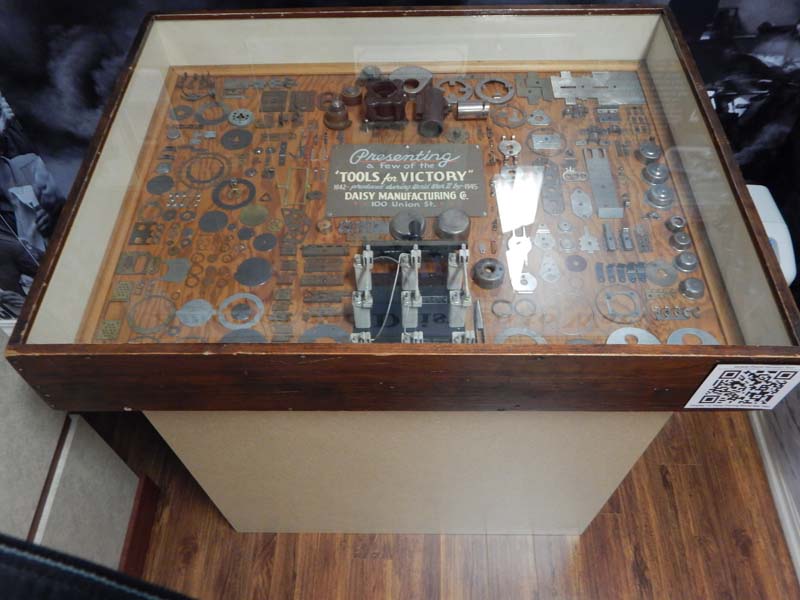
The Team Passes & Daisy Goes South
The 1950’s saw the loss of the two individuals whom, more than any others, guided Daisy to its position of dominance in the American airgun industry. On September 17, 1956 “Uncle Charlie” Bennett passed away at the age of 94. Up until a few weeks before his death he never failed to put in a daily appearance at the Daisy office. Less than 2 years later on January 24, 1959 E. C. Hough died at the age of 86. With their passing, Daisy lost the team that had guided it through three major world conflicts, three devastating economic downturns, and past countless competitors both large and small to emerge as the company whose name was synonymous with the BB gun.
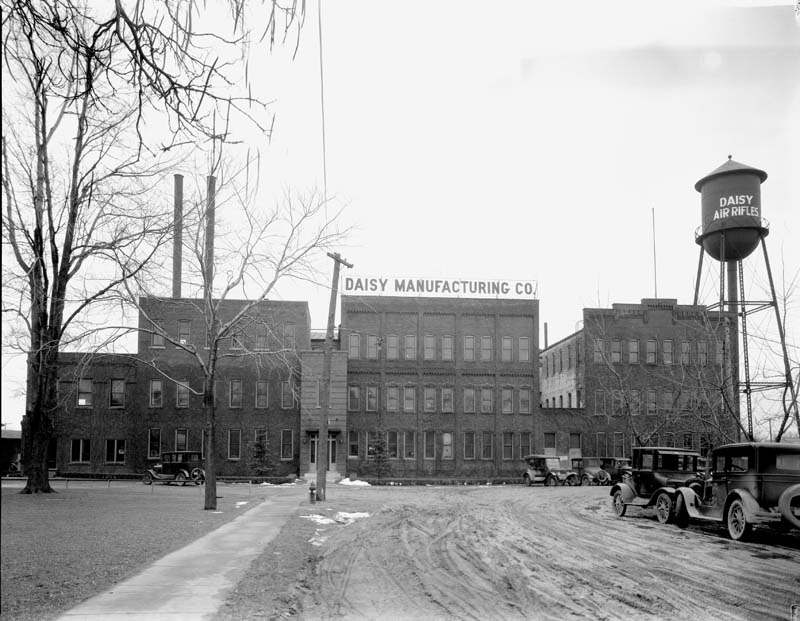
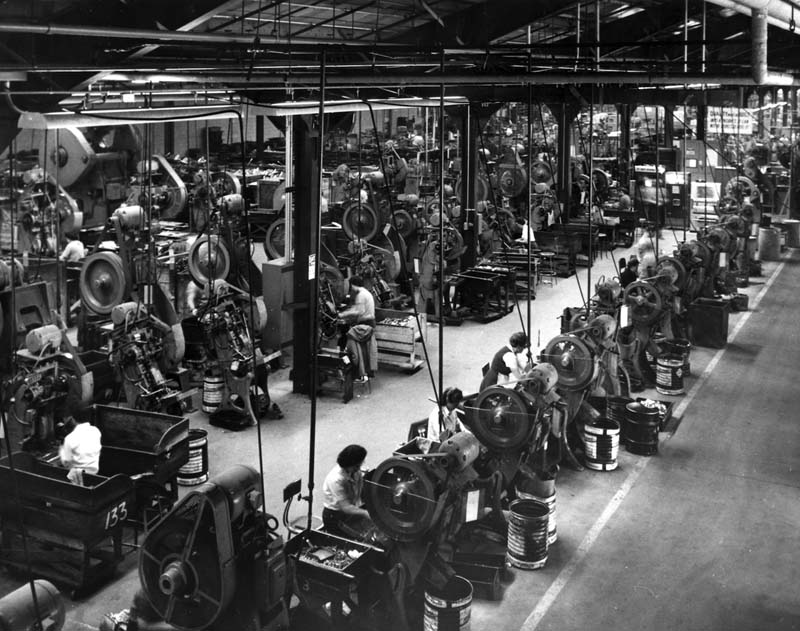
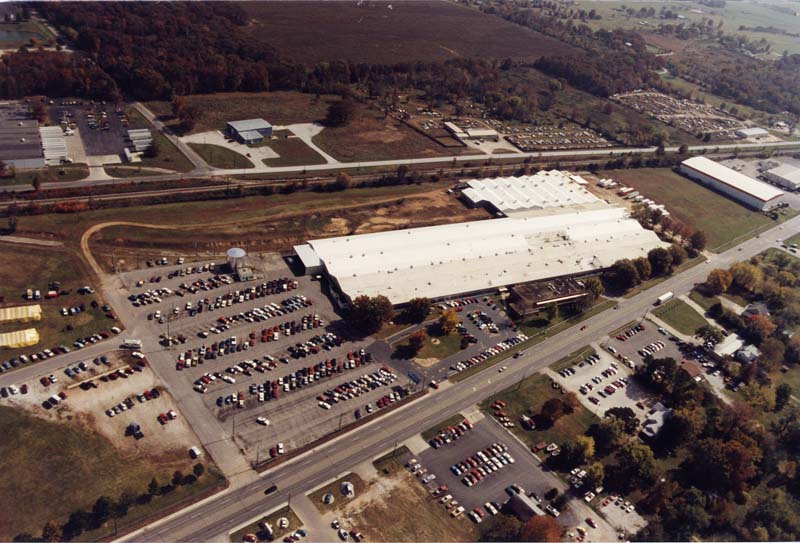
By the late 50’s the antiquated Daisy factory was becoming increasingly less efficient as modern manufacturing processes progressed. This factor coupled with spiraling taxes and a tightening labor market caused Daisy to begin a search for a new location more central to its distribution. The search, quietly carried out over a period of months, finally centered on a small northwest Arkansas community. On April 30, 1958 Daisy closed its doors for the last time in Plymouth, Michigan and the first train cars full of machinery started south to Rogers, Arkansas. July 1, 1958 was the target date to begin production in its new location but the first gun came off the line on June 26th, four days ahead of schedule.
Daisy’s relocation to Rogers, Arkansas in 1958 represented the first major investment by industry in this highly rural region. It preceded the area’s ultimate development into the hub of Arkansas’ economy. Today the market area (now referred to as Northwest Arkansas) is home to numerous corporate offices including the world’s largest retailer and poultry producer.

Spittin’ Images & Shooting Education
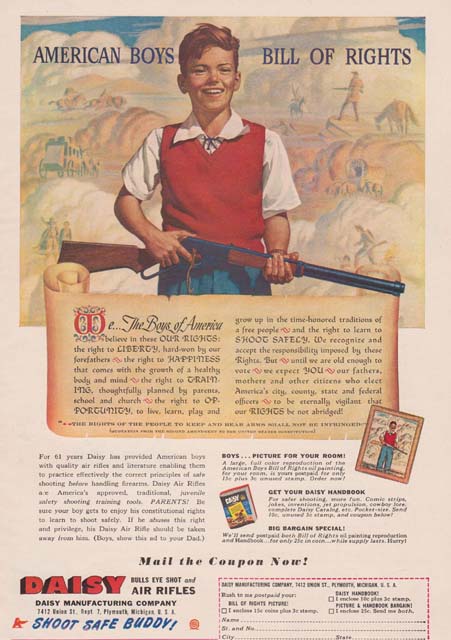
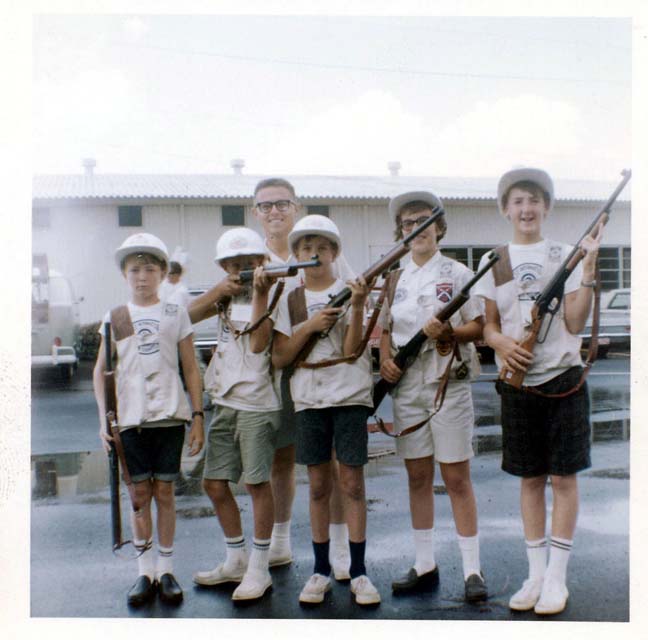
Early in 1963 Daisy partnered with the U.S. Jaycees to launch what was ultimately to become the nation’s largest and most far reaching youth Shooting Education Program. To date the grass roots program has taught more than 10 million young boys and girls the fundamentals of safe gun handling and marksmanship. It concludes each year with the Daisy National BB Gun Championship Match (The Daisy Nationals.) The first of these was held in July, 1966 in Vandalia, Ohio and the national match today is held annually in Daisy’s hometown of Rogers, Arkansas.
Today the concept has expanded to include cooperation with such groups as the Boy Scouts, American Legion, NRA Junior Clubs, high school JROTC units, the Royal Rangers, 4-H, and USA Shooting, the governing body of US Olympic shooting sports. Each year the Daisy Nationals attracts over 400 5-meter BB gun shooters plus 10-meter sporter pellet gun marksmen, plus coaches, parents and family members.
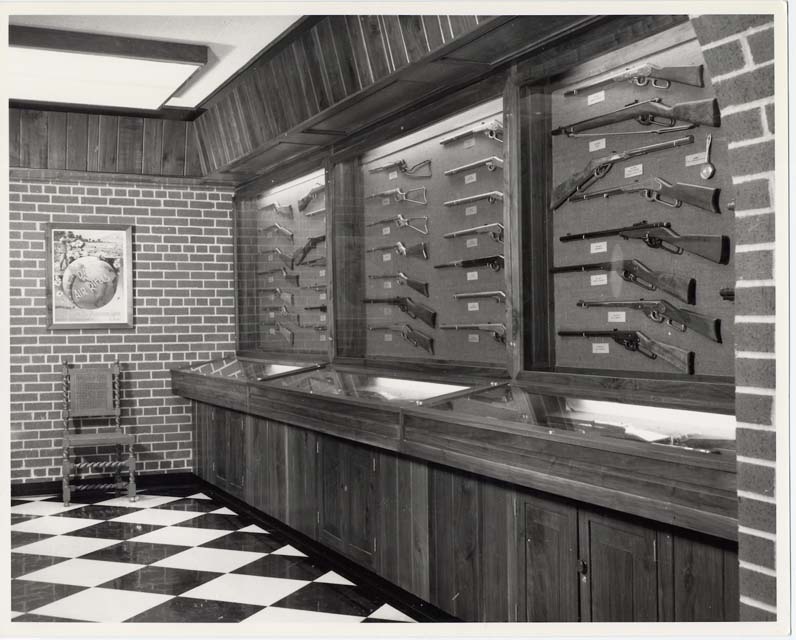
The 60s also witnessed the introduction of Daisy’s highly successful Spittin’ Image line of air guns patterned, to the smallest detail, after famous firearms. The first and best selling of these was the Model 1894 built on the lines of the famous Winchester 94 carbine. Other such notables included the Model 26 Remington Fieldmaster and .45 Colt Frontier revolver.
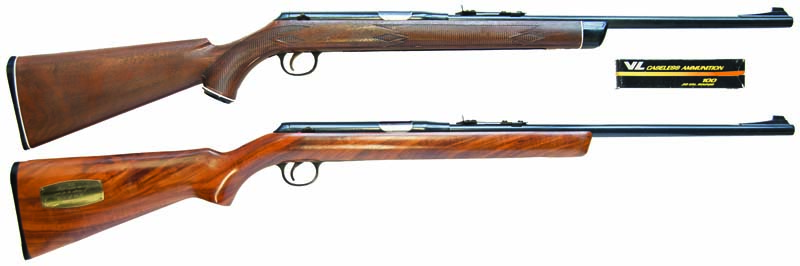
No mention of the 60s would be complete without reference to the V/L Caseless Ammunition system. The V/L was and is, to this day, a totally unique gun utilizing super heated air to ignite a propellant affixed to a .22 caliber bullet that required no brass casing. Named for its inventor, Jules Van Langenhoven, the gun and ammo were first announced to the public on August 20, 1962.
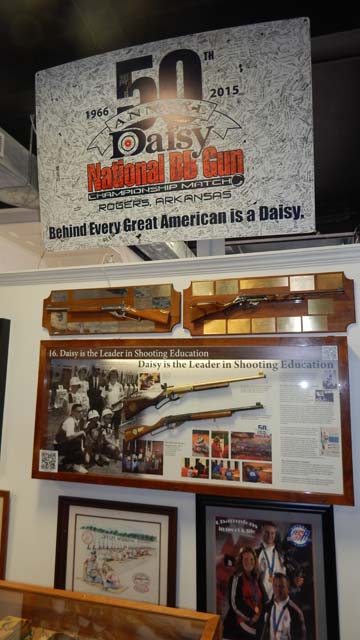
The Daisy Museum’s collection contains several Spittin’ Image examples, V/L guns and ammunition and a wall which salutes the company’s history as the leader in shooting education.
Pneumatics at Last
As far back as the late 1930s, Daisy had been tracking developments in pneumatic systems for higher-powered air guns, not because it was considering a move in that direction, but because it might offer insights into more efficient systems for its spring air guns.
In fact, it wasn’t until 1970 that Daisy decided to make the move to high-powered adult air guns. Young adults were demanding more sophisticated equipment and there were increasing restrictions on area for shooting firearms. By 1972, Daisy’s first pneumatic air gun was off the production line and ready to roll out to the trade.
The Model 880 pump-up air gun was an immediate success. To this day, it is still a part of the complete line of high-powered adult air guns offered by Daisy.
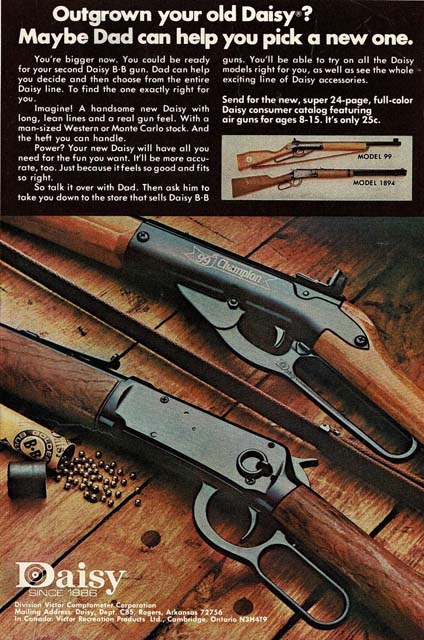
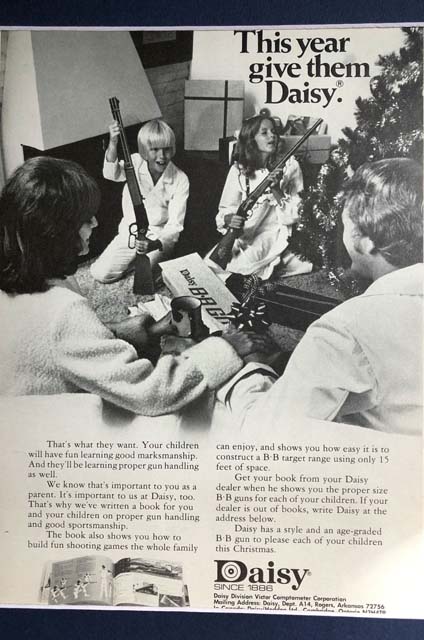
Movies in the Making
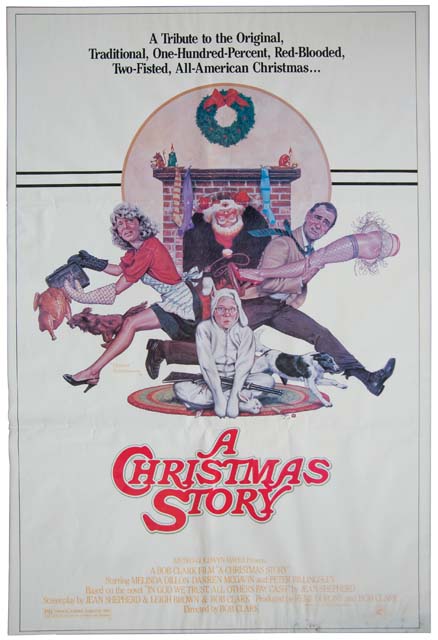
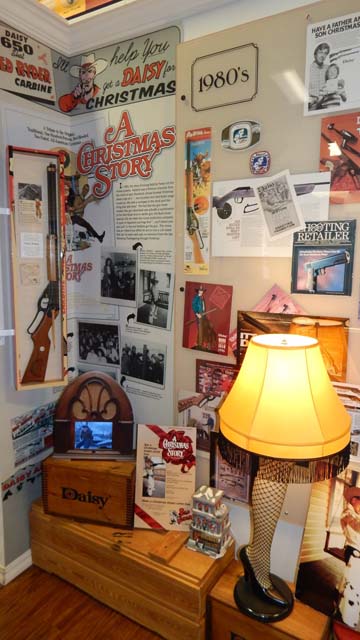
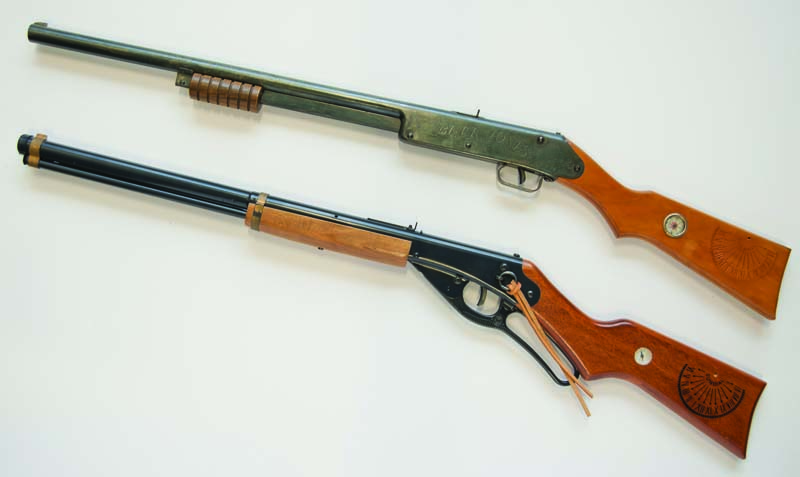
In 1983, the story of young Ralphie Parker hit the movie screens. Ralphie was a fictional character from the mind of Jean Shepherd, whose fondest Christmas dream was of a “…two-hundred shot Red Ryder range model air rifle with a compass in the stock and this thing that tells time.”
🆕 “You’ll Shoot Your Eye Out!”
The fact that the gun never existed (the gun described was actually a combination of the Red Ryder and an earlier gun, the Buck Jones Special) did not deter the movie production company. In spite of repeated warnings that “…you’ll shoot your eye out!”, in the end Ralphie got his gun.
The movie was an instant box office hit and is now a cult classic that can be seen each year on television from the day following Thanksgiving through Christmas.
Moving into the Future
In the late 1990s, in a continuing effort to control costs, improve efficiency and ensure quality, the company began purchasing components from highly specialized manufacturers. In becoming an assembly operation, Daisy no longer required the large manufacturing facility built in Rogers, Arkansas in 1958.
In 1995 Daisy acquired Brass Eagle in order to offer a complete line of paintball markers. (Daisy had manufactured markers for the forestry and cattle industries since the 1970s). While Daisy Manufacturing Company’s corporate headquarters, customer service operations, some assembly operations and BB shot manufacturing remained at the plant at 2111 South 8th Street in Rogers, Brass Eagle operations were located to an assembly facility in Granby, Missouri. From April, 1996 until November, 1997, some Daisy products were also assembled in the Granby facility while other production lines remained in Rogers, Arkansas.
When the paintball business became sufficient to stand alone, the two companies were separated and stock in Brass Eagle was offered to the public in November, 1997. However, by April, 1997, Daisy Manufacturing Company had selected an underground location in Neosho, Missouri for its assembly operations. The limestone walls of the underground facility provided insulation from outside temperatures.
The corporate offices continued to remain in Rogers as they had since 1958 and moved to a location on Stribling Drive, off Second Street in November, 1999.
The 2000’s
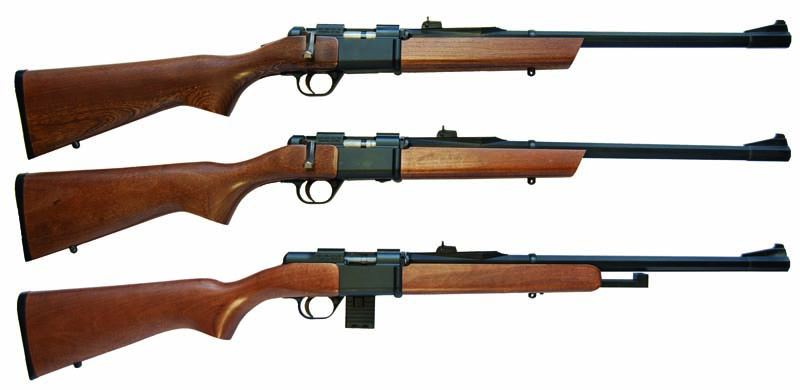
Since the company had sold the old plant on 8th Street in July of 1999 and relocated their office to an industrial park in the north part of Rogers in November, 1999, the Daisy Museum needed a new home. We found it in a 1906 bank building at 114 South First Street. The building had a lot of architectural character with archways and mosaic tile floor. It was easy to make our antique airguns and displays look right at home. The City of Rogers Parks & Recreation Department had agreed to run the Daisy Museum on a day to day basis with Daisy’s support. Several Daisy retirees, devoted to the Museum’s preservation, founded a non-profit organization called “Friends of the Museum” which provided much needed support. In March, 2000, Arkansas First Lady Janet Huckabee shot a balloon tied in the middle of a ribbon to officially mark the opening of the Daisy Airgun Museum.
Daisy’s new product introductions for 2000 included PowerLine pistols models 400 GX, 45 and 645. TruGlo® fiber optic front sights were made standard on most PowerLine rifles and the PowerLine brand of slingshots were introduced.
Daisy licensed the Winchester brand in 2000 and introduced a line of Winchester® Air Rifles at the Shooting Hunting and Outdoor Trade (SHOT) Show in early 2001. The initial lineup included walnut-stocked, .177 caliber pellet breakbarrel rifles with maximum velocities of 600, 800, and 1,000 fps, plus a Model 722 in .22 caliber at 700 fps.
Daisy secured a contract with the U.S. Navy in 2001 to produce nearly indestructible drill rifles being utilized by the U.S. Navy, honor guards, color guard and drill teams nationwide. At first glance, the Daisy drill rifle looks like a fully functional 1903-A3 Springfield rifle with a black synthetic stock. The design and durable steel components make this drill rifle capable of withstanding the abuse that is inherent in drill team use.
🇺🇸 2001 — America Will Never Forget
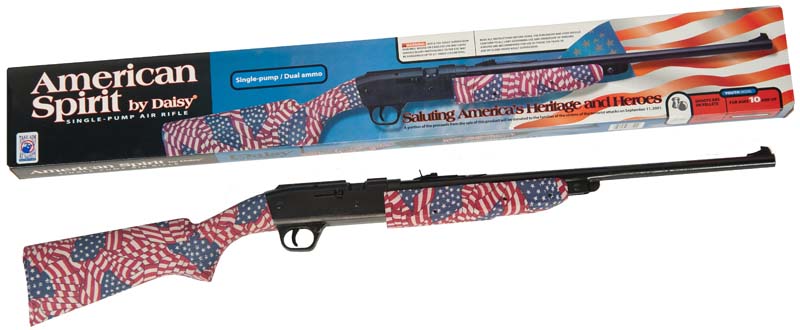
Like so many Americans, Daisy staff were arriving at work when they learned of our nation’s tragedy. Within hours, President Bush had made a plea for Americans to respond to the needs of affected families. Daisy chose to create a special gun which we named the American Spirit. Even prior to production, the company donated the estimated proceeds from the project to the United Way of Manhattan’s new 9/11 fund. The gun would never be sold in retail stores. Instead, the company donated guns to fire and police departments seeking donations for fundraising events. When only a few hundred guns remained, the Daisy Museum was honored to offer the guns to its collectors.
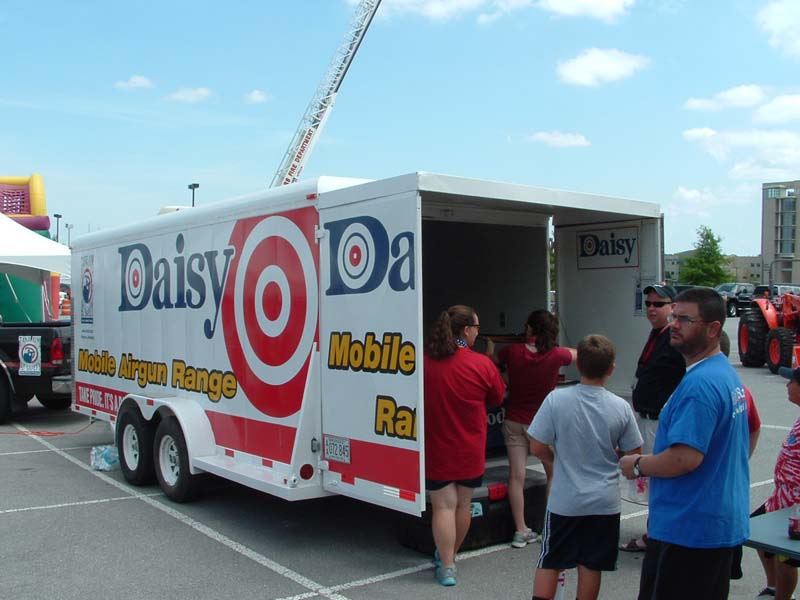
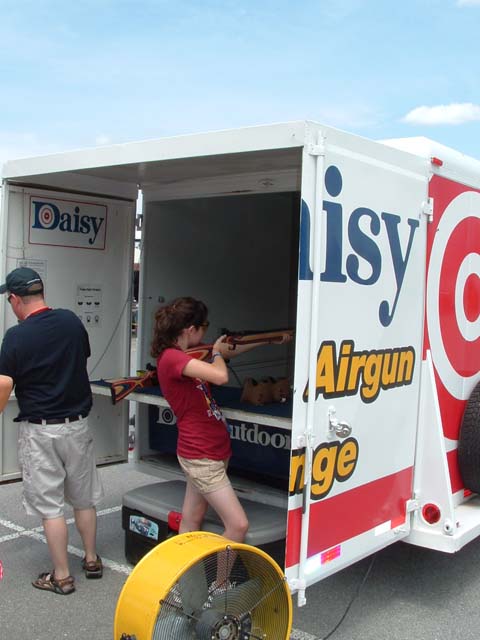
In 2002, the company introduced ShatterBlast breakable airgun targets and commissioned its Mobile Airgun Range — an 18-foot steel trailer housing a 5-meter, two-shooting-point range complete with electric target runners.
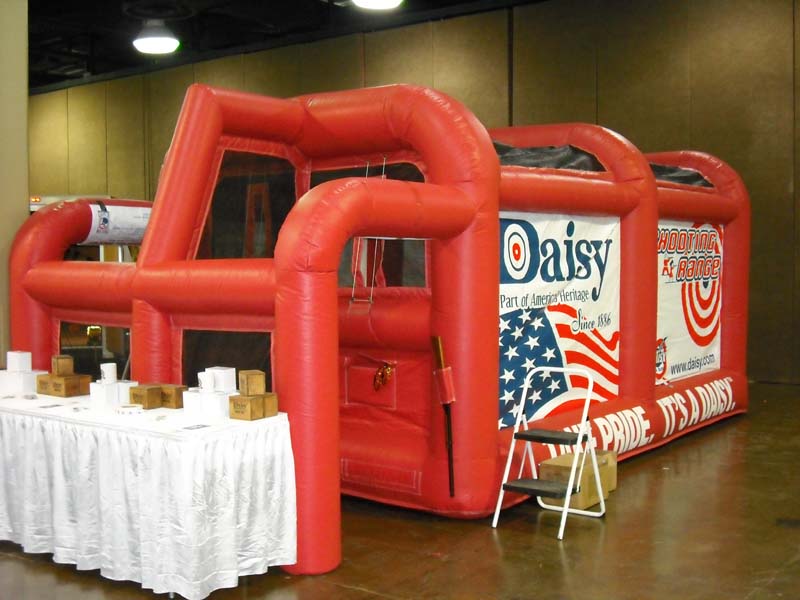
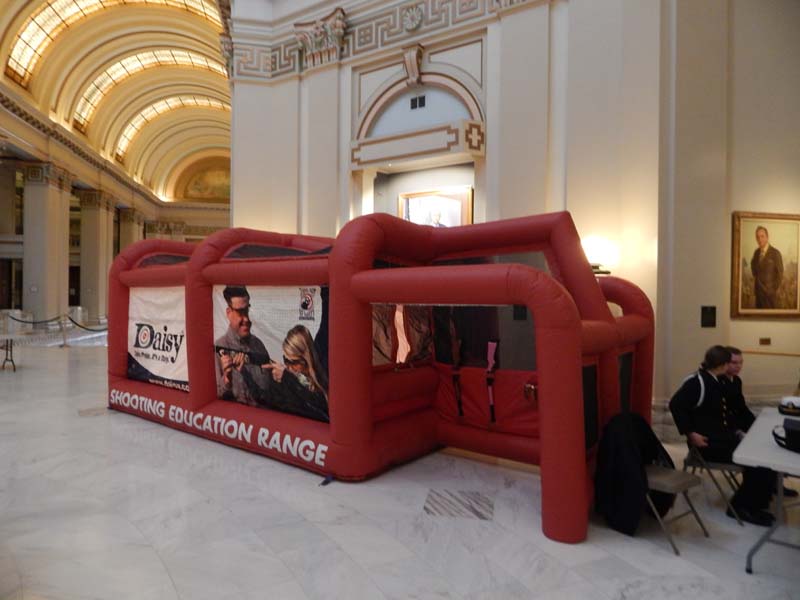
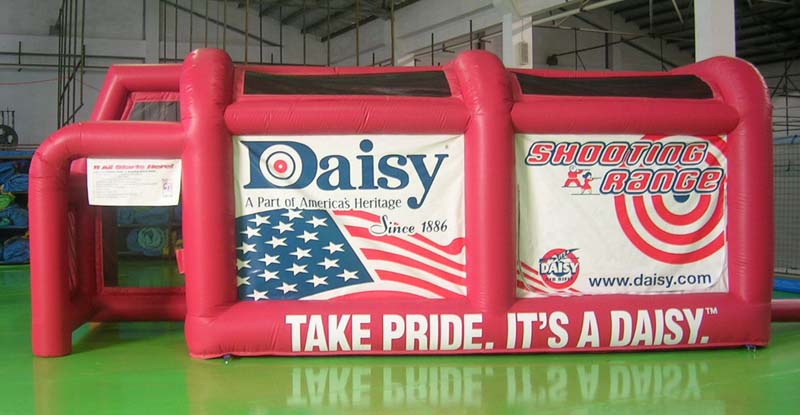
In 2003, the Model 1894 was reintroduced under the Winchester® Air Rifle brand as a lever action 15-shot BB repeater. That same year, Daisy created an inflatable, fan-forced airgun range allowing outdoor conservation organizations and retail store personnel to quickly set up a 15’ fully contained supervised airgun range just about anywhere — including, annually, in the rotunda of the Oklahoma State Capitol.
In March, 2003, the company moved its BB production equipment to a new location in Salem, Missouri (that facility closed January 1, 2006).
January 1, 2004 a non-profit corporation was founded, The Daisy Airgun Museum. The Daisy Museum collection was donated to this non-profit and it was charged with the task of operating the Daisy Museum with revenues coming from admissions, gift shop and internet sales and donations from members, the Friends of the Daisy Museum organization and support from Daisy Outdoor Products.
On October 25, 2004 the Daisy Museum relocated to the southwest corner of Second and Walnut streets, the highest traffic intersection in Historic Downtown Rogers. The new location is an historic building, dating to 1896 and known to many residents as the former Rexall Drug building. In conjunction with the relocation, the staff hosted an open house on Sunday, November 14th with a ribbon cutting and silent auction. The new chronological arrangement of antique airguns, advertising and memorabilia offers a more cohesive presentation.
On January 31st, 2005, the Daisy Museum and Daisy Outdoor Products lost a wonderful friend. David Gates had been a high school coach in Plymouth, Michigan when the president of Daisy asked him to write a shooting education curriculum during the summer school break in 1955. David did so, and never went back to coaching. He moved his family from Michigan to Arkansas in 1958, and held many positions with Daisy until his retirement — always involved in education, in Daisy’s shooting education programs and as a member of our community’s school board.
Most Rogers residents and many visitors remember the old 1960 neon Daisy sign with lights which imitated the movement of BBs hitting a target. In July, 1999, the old sign had been dismantled and put in storage by the Rogers Parks Department. In 2001 the Daisy Museum began a fund-raising campaign to restore the sign. It was re-erected in front of Daisy headquarters on May 9, 2007, with a dedication ceremony on May 14th.
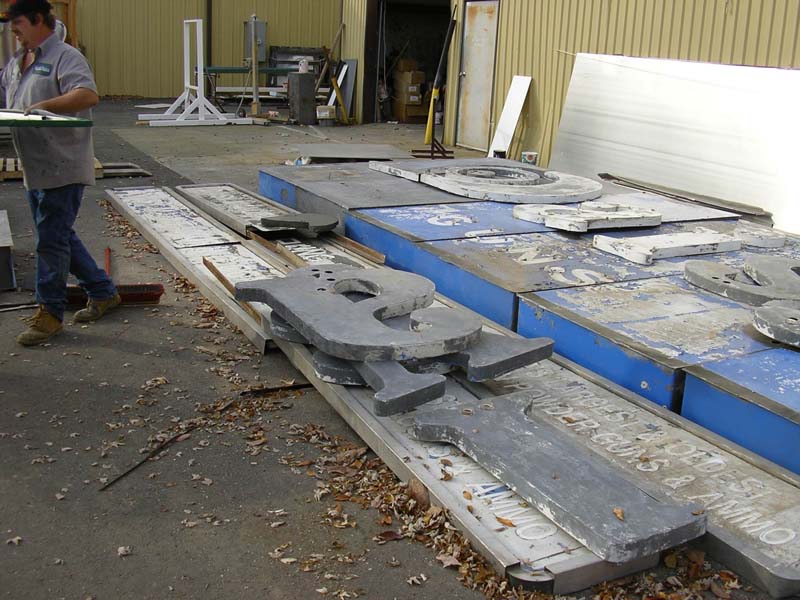
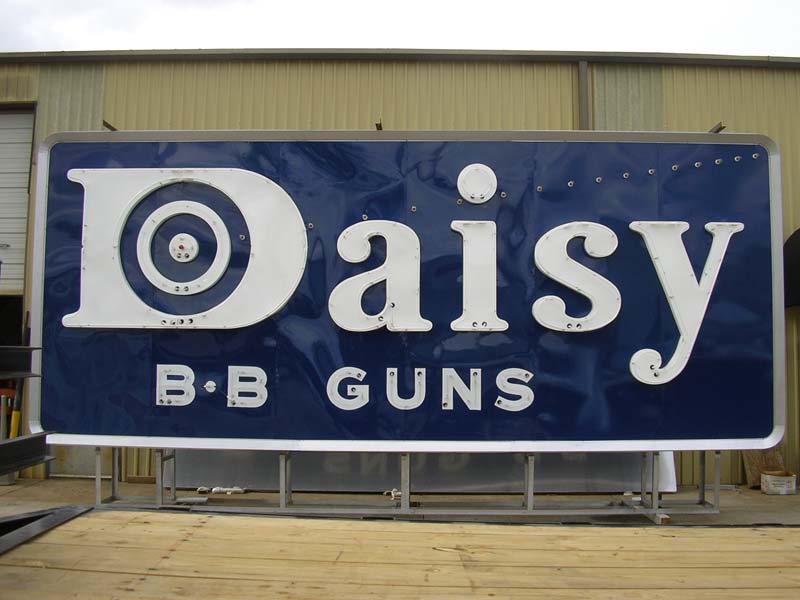
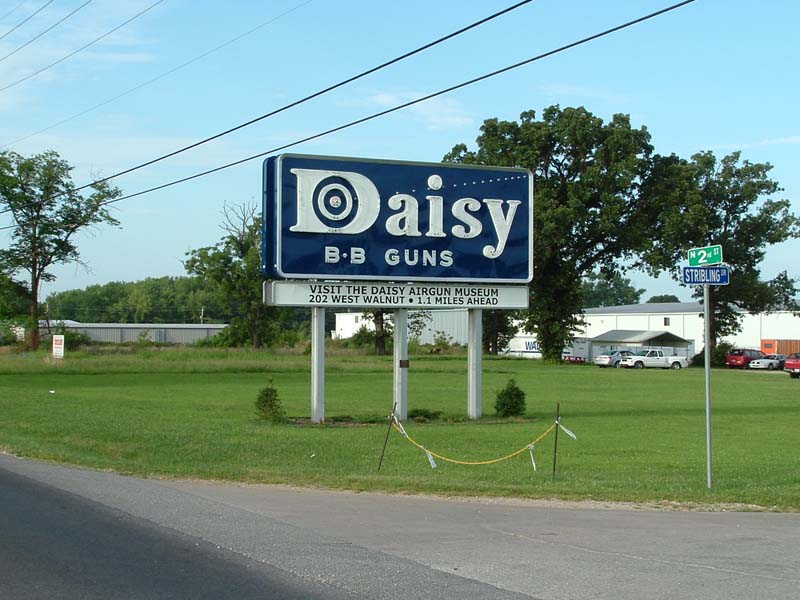
June 20, 2007, Daisy President & C.E.O. Ray Hobbs and Arkansas Governor Mike Beebe announced that Daisy is coming home to Rogers. After ten excellent years of assembly operations in Neosho, Missouri, Daisy would relocate the entire operations under one roof. The move was made in record time and on July 25, 2007, the first Red Ryder came off the production line.
In 2008, Daisy celebrated 50 years in Rogers, Arkansas. The City of Rogers and Daisy hosted a four-day weekend celebration called a Homecoming. 189 Daisy collectors from every corner of the U.S. and Canada registered for the event. The event began with a reception and tour of Daisy, followed by a picnic and Daisy Night at the Northwest Arkansas Naturals baseball game. Saturday, exhibitors displayed and swapped Daisy guns at the convention center. The event concluded with a silent auction and dinner. An extremely limited-edition engraved Red Ryder BB gun commemorated the event, numbered 1 of 189 in honor of the 189 collectors who registered.
2008 — Once Every 120 Years
In 2008, 120 years after the Plymouth Iron Windmill Company made that first wirestock Daisy BB gun in 1888, the Daisy Museum faithfully reproduced 1,000 of the guns. Studying patent drawings and taking measurements from antique guns on loan from collectors, Daisy engineers developed specifications and tolerances for every part.


Coming Home — and Looking Ahead
In 2010, for the first time in 45 years, the Daisy National BB Gun Championship Match was held in Rogers, Arkansas, where it remains hosted by Daisy today.
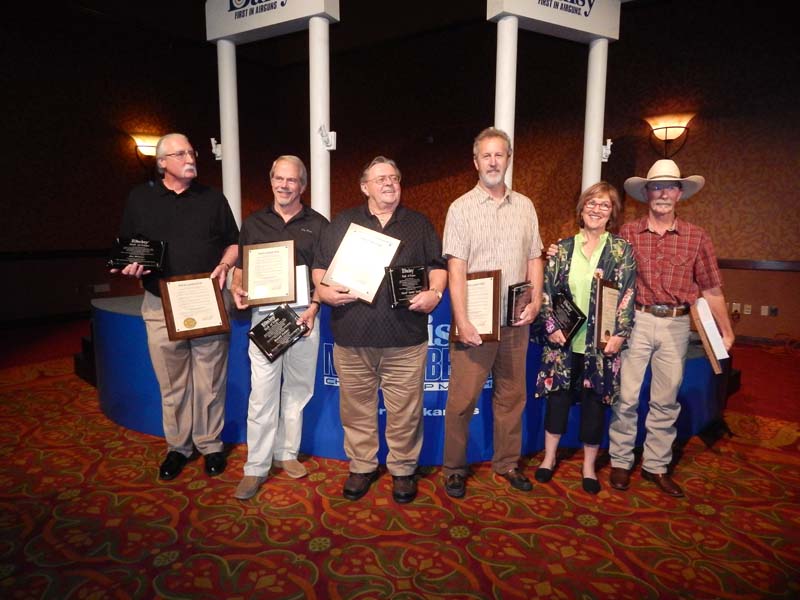
In 2015, marking the 50th consecutive Daisy Nationals match, the coach and all five members of the Jaycees team from Joplin, Missouri, who had won the first match in 1966, were reunited and honored.
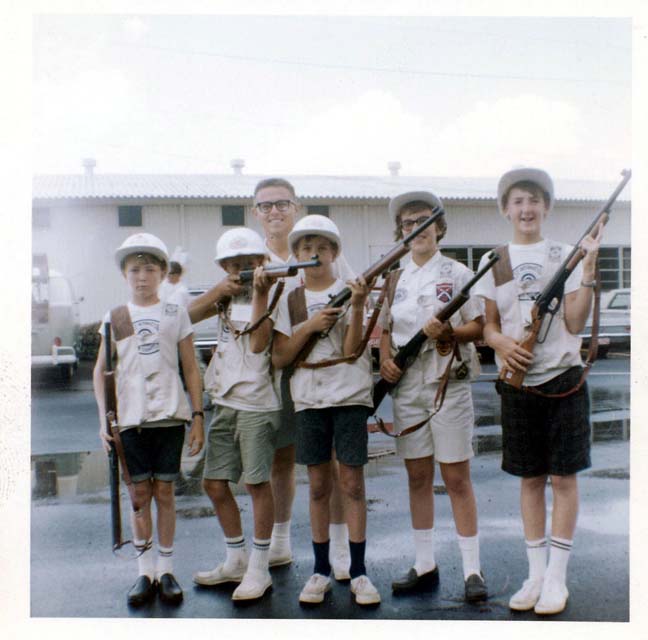
In July, 2016, Gamo Outdoor USA — a subsidiary of the private equity firm BRS & Co. and already owners of world-famous BSA airguns, optics and accessories — acquired Daisy Outdoor Products, including Winchester Air Rifles.
January 20, 2021 — The World’s Largest Daisy BB Gun
Larger-than-life, must-see tourist attractions have always lured travelers off the road for photo opportunities. In August of 2019, we had a big idea: we’d seen the giant four-story Louisville Slugger bat in Kentucky, and so the Daisy Museum approached the City of Rogers about commissioning the creation of the World’s Largest Daisy BB Gun.
By March 30, 2020 the museum had gained the approval of our City planning commission and historic commission. COVID had already shut down many things — including Elemoose, the Missouri company where the sculpture was to be fabricated. It was not until January 20, 2021 that it was complete and installed against the Second Street side of the museum’s building. It measures 25 feet tall, at a scale of 8.33:1.
Thousands of people, for whom a Daisy BB gun was their first BB gun, already come to Rogers to experience the Daisy Airgun Museum. It’s our honor to give them one more big reason to come to our hometown. See the World’s Largest BB Gun ›
July 19, 2021 — Orin Ribar passed on to larger life.
Few people today dedicate their entire career — and beyond — to one company. Orin Ribar did. His mother, Annabelle, was working in the service department at Daisy in Plymouth, Michigan when Orin graduated high school. Orin went to work in the service department on June 23, 1953. It was there that he met Patt Wohn. They married in 1955 and, with their two young daughters, joined other Daisy families who relocated to Rogers, Arkansas in 1958. After retiring from Daisy in 1996, Orin helped establish the Daisy Museum and served as curator, then valued board member. A comprehensive tour of the museum by Orin became the script for the museum’s audio tour.
Orin was a walking encyclopedia of Daisy history, facts, products and folklore. During his years at the Daisy Museum, Orin would often see a gap in the museum’s collection and bring a gun from his personal collection in order to better tell the company’s story. In a generous gesture, Orin donated these artifacts to the non-profit Daisy Museum. Many display areas in the museum today bear tags that read, “Donated by the Orin Ribar Family.” When Orin passed, he was the last remaining Daisy retiree who had made the move from Plymouth to Rogers, Arkansas.
In April, 2024, the group which owns Gamo USA, BSA and Daisy acquired Crosman Corporation and the Benjamin brand, becoming known as the Iconic Outdoor Group — proud to hold the finest brands in the airgun business.